Table of Contents
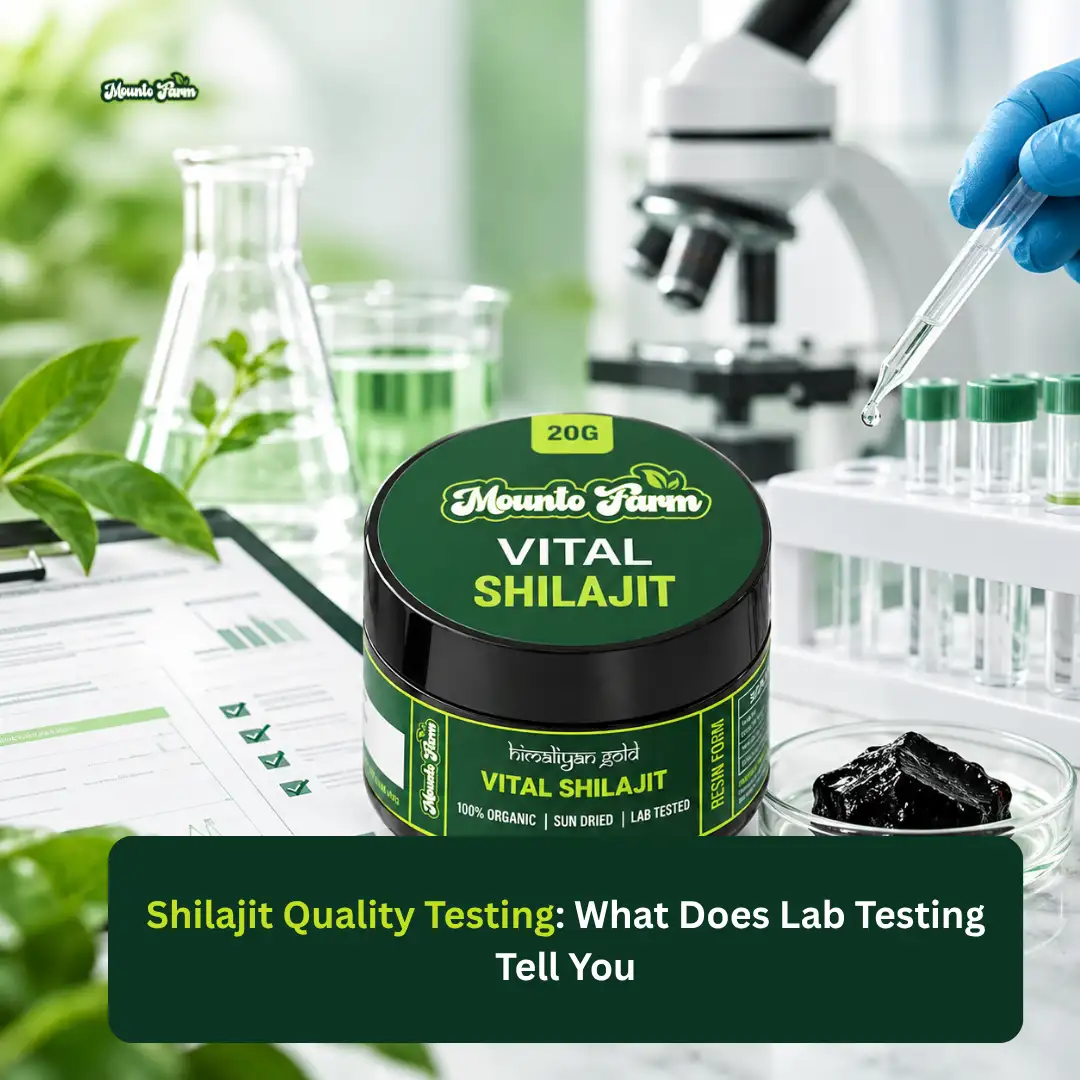
Shilajit Quality Testing can provide useful information about the purity, composition, and safety of a Pure Shilajit product. Although appearance, colour, and texture can offer some basic clues, they cannot confirm every quality or safety parameter.
When buying Himalayan Shilajit, it is therefore useful to look beyond claims such as “pure” or “natural”. Instead, check whether the brand provides information about laboratory testing, purification, sourcing, and processing. This guide explains what Shilajit Quality Testing can tell you and why it matters when comparing products.
Why Shilajit Quality Testing Matters
Shilajit is a natural substance associated with mountainous regions. Because natural materials can vary according to their source and processing, quality checks are important before a finished product reaches consumers.
Shilajit Quality Testing provides information that cannot always be confirmed through appearance alone. For example, a resin may look dark and sticky, but this does not tell you whether it has been tested for specific contaminants or other quality parameters.
Therefore, laboratory testing should be considered alongside sourcing, purification, filtration, packaging, storage, and labelling.
What Does Shilajit Quality Testing Check?
Shilajit Quality Testing can cover different parameters depending on the product, laboratory, and testing programme.
Testing may examine areas such as heavy metals, microbial quality, mineral composition, moisture, and other characteristics. However, not every laboratory test checks the same things.
For this reason, buyers should look at what was actually tested rather than assuming that a general “lab tested” statement covers every possible quality concern.
A transparent brand should provide useful information about its testing and quality-control approach.
Heavy Metal Testing for Shilajit
Heavy metal testing is an important part of Shilajit Quality Testing because natural mineral-based materials can contain trace elements.
Depending on the test, laboratories may analyse metals such as lead, arsenic, mercury, and cadmium. The results can provide information about the levels detected in the tested sample.
This type of analysis is useful because heavy metals cannot be reliably identified by looking at the colour or texture of Shilajit.
Therefore, when comparing products, check whether the brand provides information about relevant heavy metal testing rather than relying only on the phrase “100% pure”.
Microbial Testing and Product Safety
Microbial analysis can also form part of Shilajit Quality Testing. Natural materials may come into contact with microorganisms during collection, processing, handling, or storage.
Laboratory testing can assess selected microbiological parameters in the finished product. The exact tests may differ depending on the product and applicable quality requirements.
However, one test does not automatically cover every possible issue. A suitable quality programme should use testing that is relevant to the product.
This is why laboratory analysis should work alongside proper purification, handling, manufacturing, and storage practices.
Checking Shilajit Composition
Another purpose of Shilajit Quality Testing is to provide information about the composition of the product.
Shilajit contains naturally occurring compounds and mineral elements. However, its composition can vary according to geographical source, raw material, purification, and processing.
Laboratory analysis can therefore help provide a more detailed picture of a particular product.
It is important, however, not to judge an entire Shilajit product based on one compound or one laboratory measurement. Instead, consider the wider quality information available from the brand.
Purity and Contaminant Testing
Raw Shilajit may contain unwanted natural material such as soil, stones, and other debris before purification. Consequently, purification and filtration are important steps in preparing Shilajit for consumers.
Shilajit Quality Testing can provide additional information about selected contaminants and quality parameters in the finished product.
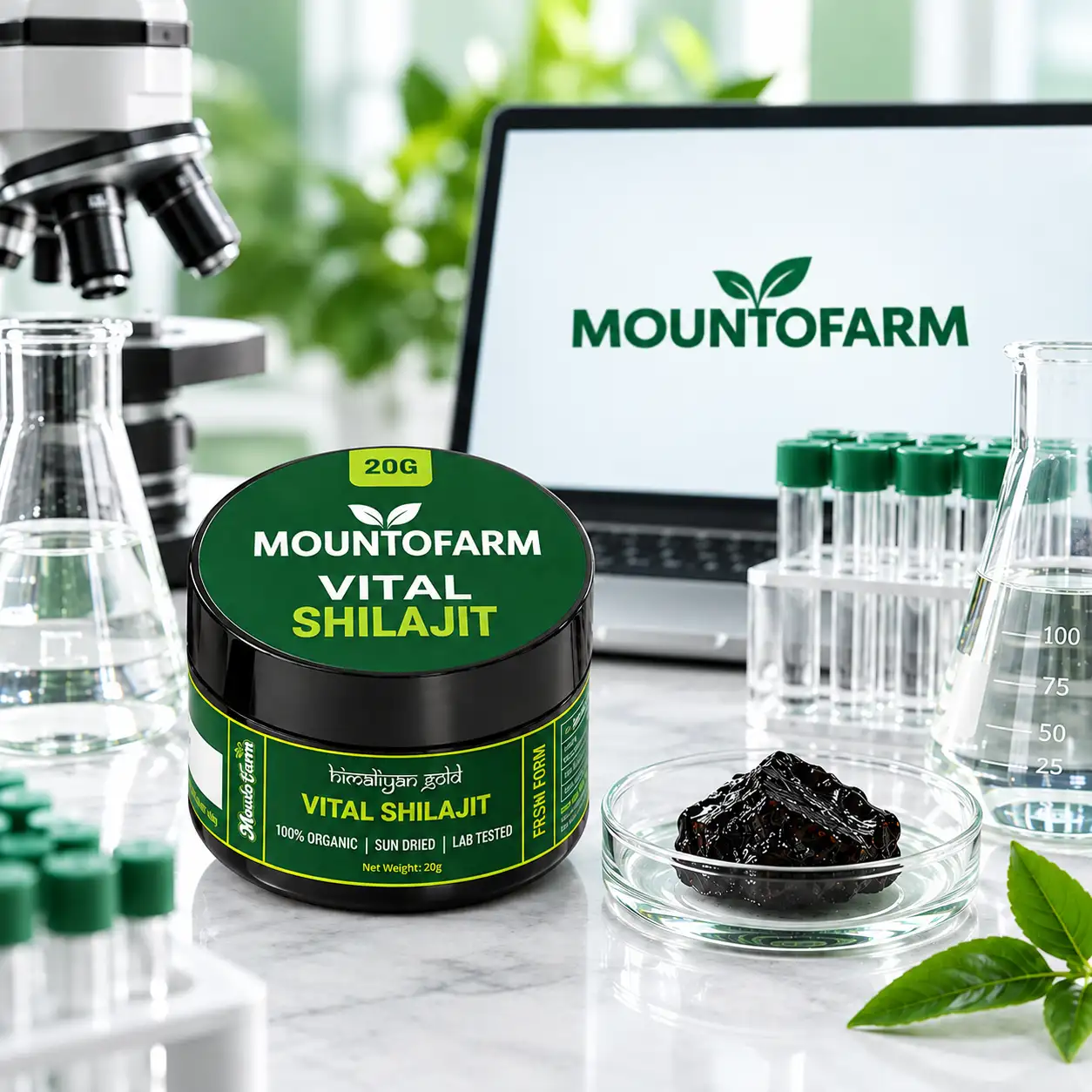
MountoFarm describes a process involving raw Shilajit stones, soaking, filtration, and drying before the purified resin is prepared.
Testing should therefore be viewed as one part of a wider process. Laboratory analysis does not replace proper sourcing or purification, but it can provide additional information about the finished product.
Why Laboratory Testing Is Important
A quality-focused Shilajit process usually involves several stages. First, suitable raw material needs to be sourced. Next, the material can go through purification and filtration. Finally, laboratory analysis can provide information about selected quality and safety parameters.
This makes Shilajit Quality Testing useful for both manufacturers and consumers.
For buyers, testing information can make product comparisons more practical. Instead of choosing a product based only on colour, texture, packaging, or marketing claims, you can also review its available quality information.
However, testing should always be considered together with source, processing, ingredients, packaging, and storage.
How to Review Shilajit Testing Information
Before buying Himalayan Shilajit, consider these simple checks:
- Testing type: What has the laboratory tested?
- Quality parameters: Are the tested areas clearly listed?
- Heavy metals: Does the information cover relevant metals?
- Microbial testing: Are microbiological checks mentioned where appropriate?
- Product identity: Does the testing information relate to the actual product?
- Purification: Does the brand explain how the Shilajit is processed?
- Transparency: Can the brand answer questions about its testing process?
These checks can help you understand Shilajit Quality Testing without relying on a single marketing claim.
Why Consider MountoFarm?
MountoFarm is one option buyers can consider when researching Himalayan Shilajit and its quality information. The brand states that its Shilajit is sourced from mountainous regions of Gilgit-Baltistan, including the Himalayas, Karakoram, and Hindukush.
MountoFarm also describes a purification process involving raw Shilajit stones, Himalayan spring water, filtration, and drying. The brand states that laboratory quality checks form part of its approach to product quality.
For buyers comparing Shilajit Quality Testing, reviewing information about MountoFarm’s sourcing, purification, processing, and quality checks can provide useful context before purchasing.
FAQs
What Is Shilajit Quality Testing?
Shilajit Quality Testing refers to laboratory analysis used to assess selected quality, composition, and safety parameters of a Shilajit product.
What Can Shilajit Lab Testing Detect?
Depending on the testing programme, analysis may include heavy metals, microbial parameters, mineral composition, moisture, and other characteristics.
Is Dark Shilajit Proof of Good Quality?
No. Colour alone cannot confirm overall Shilajit quality. Source, purification, laboratory testing, ingredients, packaging, and storage should also be considered.
Why Is Heavy Metal Testing Important?
Heavy metal testing can provide information about the levels of specific metals in a tested Shilajit sample. This information cannot be confirmed reliably through appearance alone.
Is Lab Testing Enough to Judge Shilajit?
No. Shilajit Quality Testing is one part of a wider quality process. Buyers should also review sourcing, purification, processing, packaging, labelling, and storage information.
Conclusion
Shilajit Quality Testing can provide useful information about selected purity, composition, contamination, and safety parameters. Therefore, laboratory analysis is an important consideration when comparing Himalayan Shilajit products.
However, lab testing should not be viewed in isolation. Source, purification, filtration, processing, packaging, ingredients, and storage also contribute to the overall quality information available to buyers.
If you are comparing Himalayan Shilajit, review the available testing and processing information carefully. MountoFarm can also be considered by buyers who want to review information about sourcing, purification, processing, and quality checks.
Looking for Himalayan Shilajit with clear product and processing information? Explore MountoFarm Shilajit and review the available product details before making your choice.