Table of Contents
What Is Shilajatu?
In shilajit ancient texts, the substance is commonly described under names such as Shilajatu, Shilajit, and related Sanskrit terms. The name is often connected with the idea of a substance associated with rocks or mountains.
Classical descriptions present shilajatu as a naturally occurring material obtained from mountainous areas. Its historical identity is therefore closely linked with the Himalayan and broader South Asian mountain environment.
The Meaning Behind the Name
The Sanskrit term Shilajatu is traditionally connected with shila, meaning rock or stone, and ja, associated with being born or produced. This reflects the traditional understanding of the substance as something emerging from mountainous rock formations.
Shilajit in Classical Ayurvedic Literature
Several important Ayurvedic works discuss shilajatu. Among the most frequently referenced are the Charaka Samhita, Sushruta Samhita, and Ashtanga Hridaya.
These works do not describe shilajit using modern supplement terminology. Instead, they discuss its qualities, identification, preparation, and traditional applications within the Ayurvedic framework.
Why These Texts Are Important
These classical works were not written as modern clinical studies. Instead, they represent traditional medical knowledge developed through historical Ayurvedic practice.
Therefore, when reading them today, it is useful to understand their historical context rather than interpreting every traditional statement as modern medical proof.
What Charaka Samhita Says
The Charaka Samhita is one of the foundational texts of Ayurveda and contains descriptions of Shilajatu. Its discussion places shilajatu within traditional approaches to maintaining health and supporting the body.
The text also describes methods related to identifying and preparing suitable shilajatu. This makes the Charaka Samhita particularly relevant when studying the historical development of shilajit use.
Shilajatu in Rasayana Tradition
One important Ayurvedic concept connected with shilajatu is Rasayana. Rasayana refers broadly to traditional approaches associated with nourishment, vitality, and maintaining wellbeing.
Shilajatu became associated with this area of Ayurvedic practice. However, modern readers should understand Rasayana within its historical Ayurvedic context rather than treating it as equivalent to a modern medical treatment.
What Sushruta Samhita Says
The Sushruta Samhita is another major Ayurvedic text that discusses shilajatu. Like other classical sources, it provides information about the substance within the framework of traditional medicine.
Its descriptions contribute to the historical record showing that shilajatu was not simply a modern wellness trend. Knowledge about the substance existed within established Ayurvedic literature many centuries ago.
Traditional Characteristics
Classical Ayurvedic descriptions pay attention to characteristics that could help practitioners identify suitable substances. These included aspects of appearance, consistency, source, and other observable qualities.
This historical focus on identification is especially interesting today because modern consumers also need ways to distinguish properly processed products from questionable material.
Shilajit in Ashtanga Hridaya
The Ashtanga Hridaya, traditionally attributed to Vagbhata, is another major Ayurvedic work associated with shilajatu. It helped organise and present Ayurvedic medical knowledge in a more concise form.
References to shilajatu in classical Ayurvedic literature show its continuing role within traditional practice. They also demonstrate how knowledge about the substance was preserved and passed between generations.
Continuity of Ayurvedic Knowledge
The appearance of shilajatu across major Ayurvedic works suggests that knowledge about the substance continued across different periods of Ayurvedic development.
Consequently, shilajit ancient texts are valuable for understanding the historical background behind its modern popularity.
Traditional Classification of Shilajit
Classical Ayurvedic sources describe different characteristics and classifications associated with shilajatu. Some traditional systems discuss variations based on the material’s source and qualities.
These classifications were part of the Ayurvedic system of understanding natural substances. They should not automatically be interpreted as modern chemical classifications.
Why Classification Mattered
Classification helped traditional practitioners decide how a natural substance should be identified and used. This reflects the broader Ayurvedic practice of paying close attention to the source and characteristics of natural materials.
How Ancient Practitioners Prepared Shilajit
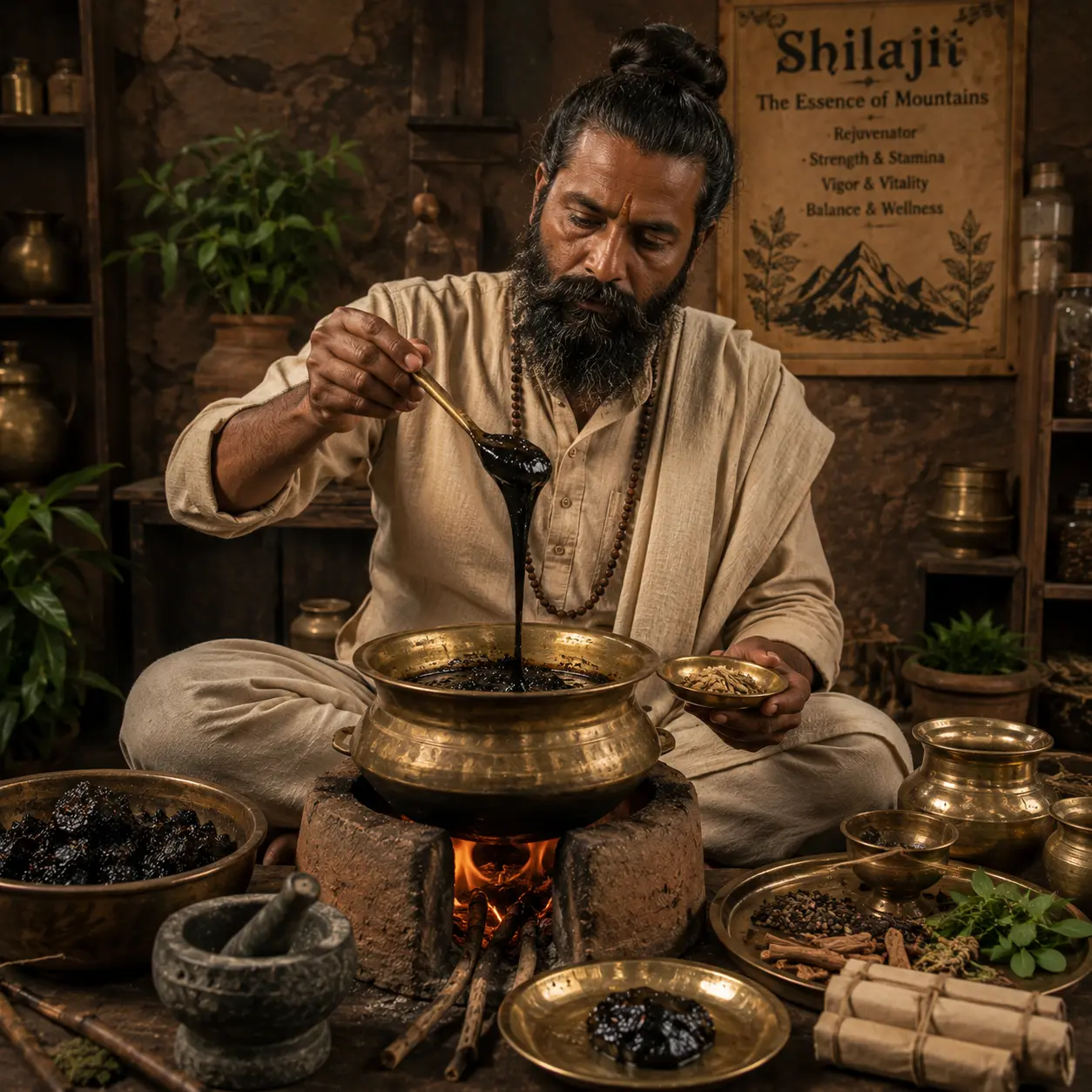
Preparation was an important part of the historical use of shilajatu. Ancient Ayurvedic texts describe processes intended to make naturally collected material suitable for traditional applications.
The precise procedures varied according to the text and traditional interpretation. Therefore, it is inaccurate to suggest that there has always been one universal method of shilajit preparation.
From Raw Material to Traditional Preparation
Raw material collected from mountains could contain unwanted physical matter. Traditional preparation involved processes intended to separate unsuitable material and create a usable preparation.
Modern manufacturers may use controlled purification and laboratory testing, which are different from ancient preparation methods.
Traditional Uses Described in Ayurveda
Shilajit ancient texts associate shilajatu with several areas of traditional Ayurvedic practice. These include concepts related to strength, vitality, reproductive health, and general wellbeing.
However, these are traditional descriptions, not modern medical recommendations. Current scientific research needs to be considered separately when discussing whether specific effects have been demonstrated.
Shilajit and Traditional Vitality
Ayurvedic traditions associated shilajatu with physical strength and vitality. This historical association remains one reason it continues to attract interest today.
Shilajit and Male Wellness
Traditional Ayurvedic literature also connects shilajatu with aspects of male reproductive and sexual wellbeing. Modern interest in testosterone and male health has therefore added another layer to its popularity.
Still, historical references should not be presented as proof that shilajit treats testosterone deficiency or other medical conditions.
Ancient Knowledge vs Modern Research
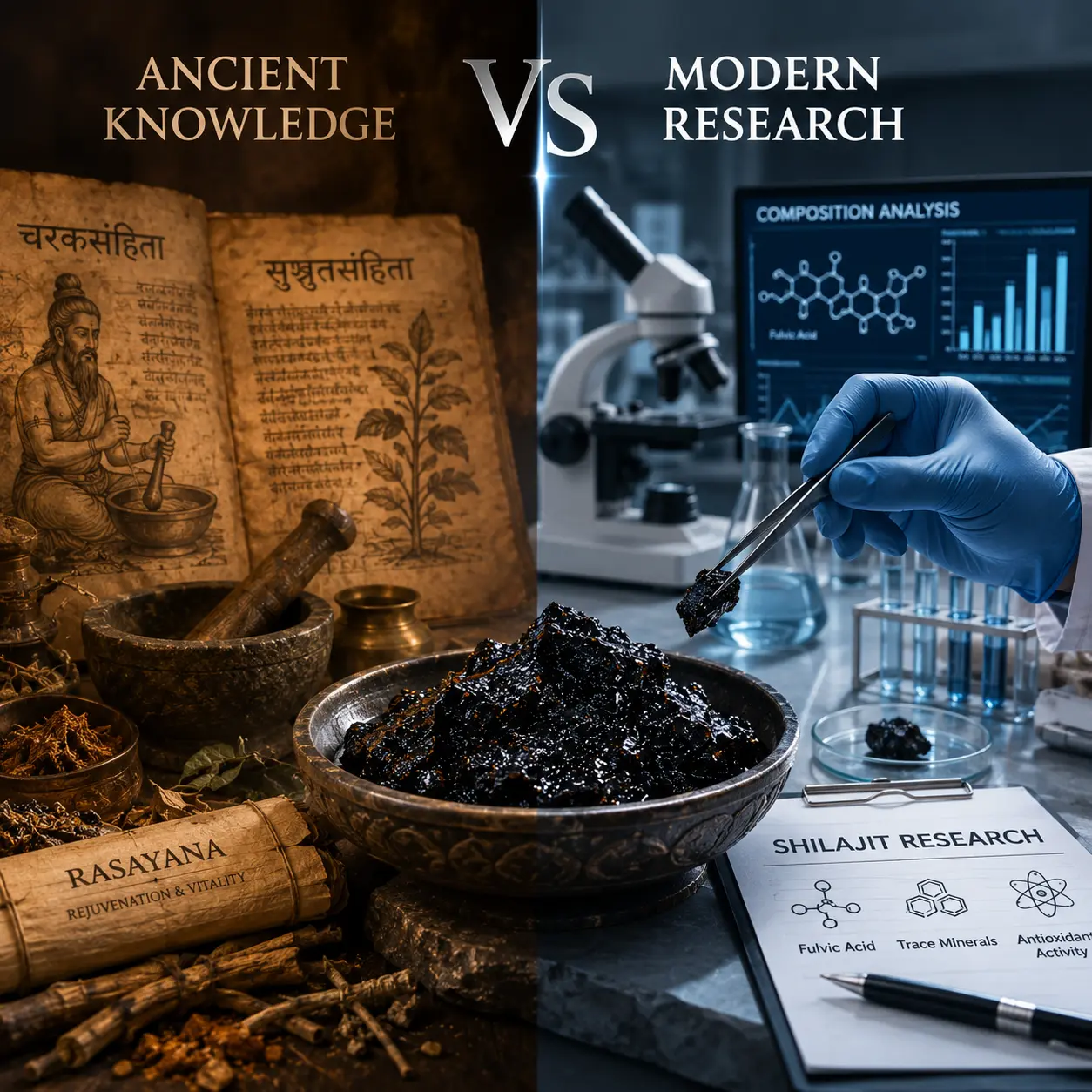
This distinction is essential when discussing shilajit ancient texts. Classical Ayurvedic scriptures provide historical evidence of traditional use, while modern scientific studies evaluate specific effects using contemporary research methods.
Some modern studies have investigated purified shilajit and areas such as testosterone, exercise-related outcomes, and male reproductive health. However, the amount and quality of evidence vary between claims.
What Ancient Texts Can Tell Us
Ancient texts can help us understand:
- How shilajit was traditionally identified
- Where practitioners believed it came from
- How it was prepared
- How Ayurveda classified it
- Which traditional uses were associated with it
They cannot, by themselves, establish modern clinical effectiveness.
Why These Texts Still Matter
Studying shilajit ancient texts provides useful historical context for an ingredient that has moved from traditional South Asian medicine into the global wellness market.
These sources also show that shilajit has a much longer history than its modern supplement popularity suggests. At the same time, modern consumers can combine historical knowledge with contemporary quality standards, including responsible sourcing, purification, and laboratory testing.
Frequently Asked Questions
Which Ancient Ayurvedic Texts Mention Shilajit?
The Charaka Samhita, Sushruta Samhita, and Ashtanga Hridaya are among the major Ayurvedic texts that discuss shilajatu and its traditional characteristics and uses.
What Did Ancient Ayurveda Call Shilajit?
Ancient Ayurvedic literature commonly uses the Sanskrit term Shilajatu for shilajit. The name is associated with its natural connection to rocks and mountainous regions.
Did Ancient Ayurvedic Practitioners Use Shilajit?
Yes. Shilajatu was included in traditional Ayurvedic preparations and was associated with vitality, strength, and general wellbeing.
Did Ancient Texts Prove That Shilajit Increases Testosterone?
No. Ancient texts describe traditional uses rather than providing modern clinical evidence. Current scientific research must be considered separately when evaluating testosterone-related claims.
How Was Shilajit Traditionally Prepared?
Traditional Ayurvedic texts describe methods for processing shilajatu before use. These historical methods varied, while modern producers may use controlled purification, filtration, and laboratory testing.
Conclusion
Shilajit ancient texts reveal a long tradition of knowledge surrounding Shilajatu in Ayurveda. Classical works such as the Charaka Samhita, Sushruta Samhita, and Ashtanga Hridaya describe its characteristics, preparation, classification, and traditional applications. Today, that historical foundation continues to influence interest in shilajit, while modern consumers should also consider scientific evidence, responsible sourcing, purification, and quality testing.
Explore quality Himalayan shilajit from Mountofarm and experience an ingredient with centuries of traditional history.