Table of Contents
Where Does Shilajit Come From?
Shilajit is naturally found in high-altitude mountainous areas. It is commonly associated with regions such as the Himalayas, Karakoram, and Hindukush. The natural material forms within rocky environments and contains organic and mineral compounds.
Because the source can affect the composition of natural Shilajit, Shilajit Sourcing and Processing begins with selecting suitable raw material from reliable mountain sources.
The collection process also needs care because raw material can contain stones, soil, and other unwanted materials.
How Shilajit Sourcing Works
The first stage of Shilajit Sourcing and Processing is collecting raw Shilajit from its natural environment. Raw material may be found attached to or between rocks in mountainous areas.
After collection, the material is separated from larger pieces of rock and visible debris. This step helps prepare the raw material for further processing.
Reliable sourcing is important because the quality of raw material can vary depending on its geographical origin and natural composition.
Shilajit Sourcing and Processing of Raw Material
Once collected, raw Shilajit requires preparation before purification. Large pieces can be crushed into smaller portions to make the next stages easier.
In some traditional processing methods, raw Shilajit is soaked in water. MountoFarm states that its raw Shilajit stones are crushed and soaked in fresh Himalayan spring water for around 3–4 days.
This process helps separate the soluble Shilajit material from unwanted stones and other solid debris.
How Is Shilajit Cleaned?
Cleaning is an important part of Shilajit Sourcing and Processing because naturally collected material may contain unwanted particles.
After soaking, the Shilajit-containing liquid can go through filtration. Filtration helps remove remaining physical impurities while retaining the dissolved material.
The number of filtration stages and the overall process can vary between producers. Therefore, buyers should look for brands that provide clear information about how their Shilajit is processed.
Shilajit Sourcing and Processing Through Filtration
Filtration is one of the key stages of Shilajit Sourcing and Processing. It helps separate unwanted particles from the Shilajit solution.
MountoFarm states that its Shilajit-infused water goes through a four-step filtration process lasting around 5–7 days. Multiple filtration stages can help remove remaining unwanted material before the purified resin moves to the drying stage.
However, filtration alone should not be treated as proof of product quality. Testing and proper quality control are also important.
Why Is Drying Important?
Drying is another important stage in Shilajit Sourcing and Processing. After filtration, the purified material contains water and needs controlled drying before it becomes a thicker resin.
MountoFarm describes using solar drying/dehydration as part of its process. The company states that its purified Shilajit may be dried for an extended period before packaging.
Proper drying can help achieve the desired texture and consistency. Storage conditions after drying are also important for maintaining product quality.
Testing Shilajit Before Packaging
Quality testing is an important part of Shilajit Sourcing and Processing. Natural Shilajit can contain minerals and trace elements, but some samples may also contain unwanted heavy metals.
For this reason, buyers should look for products supported by appropriate laboratory testing. Testing may cover areas such as heavy metals, microbial contamination, and other quality parameters.
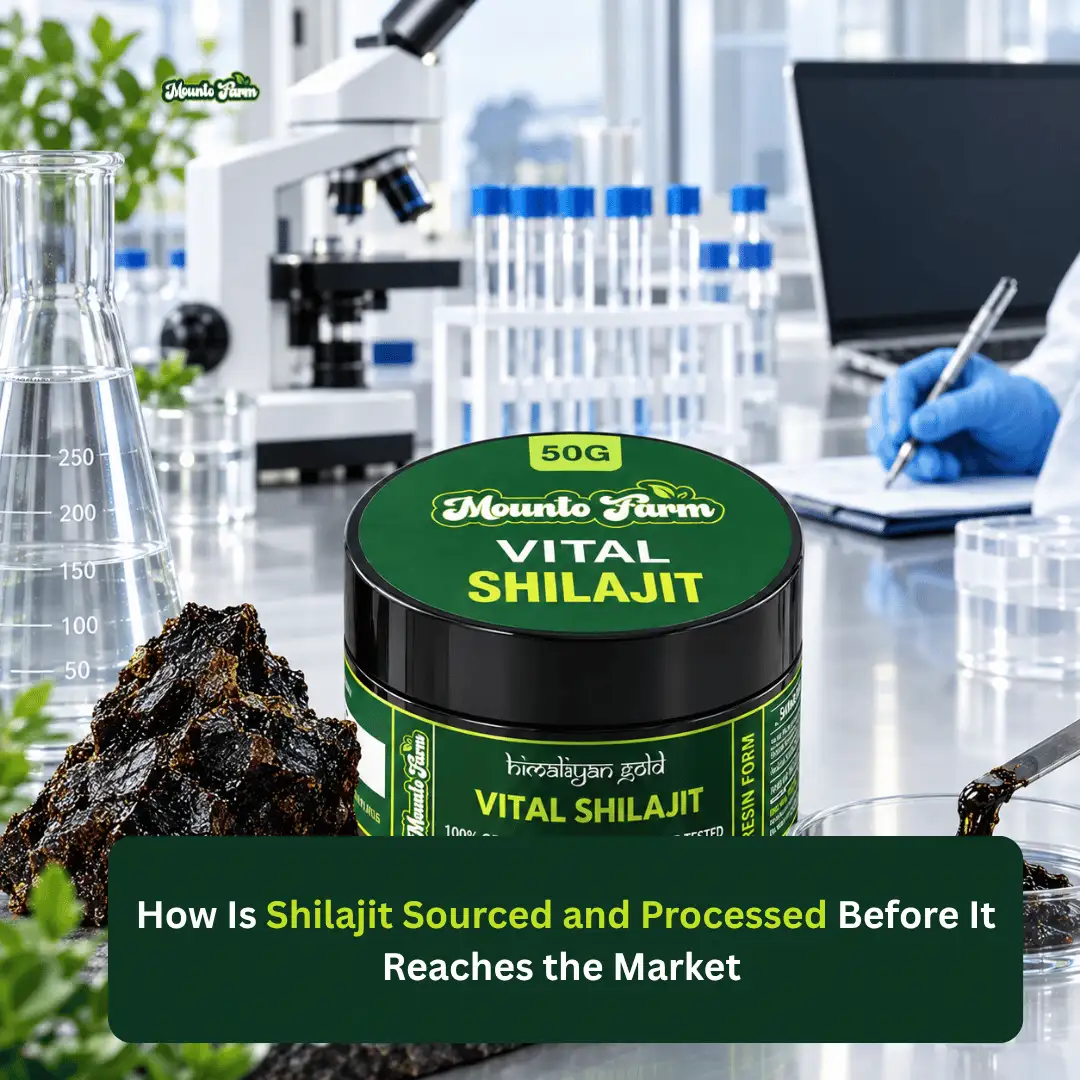
MountoFarm states that its products undergo laboratory testing and quality checks. Buyers should review available testing information instead of relying only on general claims such as “pure” or “natural.”
Packaging and Storage
The final stages of Shilajit Sourcing and Processing include packaging and storage. Once the resin reaches the desired consistency, it should be placed in suitable packaging that helps protect it from moisture, heat, and contamination.
Good storage instructions are also important. Customers should follow the manufacturer’s recommendations regarding temperature, moisture, and keeping the container properly closed.
What Should Buyers Check?
When buying Shilajit, consider these points:
- Source: Check where the raw Shilajit comes from.
- Processing: Look for clear purification and filtration information.
- Testing: Check whether laboratory testing is available.
- Packaging: Choose properly sealed and labeled products.
- Product details: Avoid unclear claims about origin or quality.
These checks can help buyers understand the complete Shilajit Sourcing and Processing journey before purchasing.
MountoFarm Shilajit Sourcing and Processing
MountoFarm describes its Shilajit as being sourced from mountainous regions including the Himalayas, Karakoram, and Hindukush in Gilgit-Baltistan. Its stated process includes crushing raw Shilajit stones, soaking them in fresh Himalayan spring water, filtration, drying, and laboratory quality checks.
This information gives customers a clearer view of how Shilajit Sourcing and Processing can move from raw mountain material to a finished resin product.
FAQs
Why Is Shilajit Sourcing and Processing Important?
Shilajit Sourcing and Processing helps remove unwanted material and prepare raw Shilajit for use as a purified resin. Source, filtration, drying, and testing all form important parts of the process.
Is Raw Shilajit Ready to Use?
Raw Shilajit may contain stones, soil, and other unwanted material. It generally requires cleaning and purification before it is prepared as a finished product.
Why Is Shilajit Tested?
Testing can help identify unwanted contaminants and confirm specific quality parameters. Laboratory testing is especially relevant for checking heavy metals and microbial contamination.
How Long Does Shilajit Processing Take?
Processing time varies by producer and method. Soaking, filtration, drying, and testing can each require different amounts of time.
Conclusion
Shilajit Sourcing and Processing involves several stages, starting with the collection of natural mountain material and continuing through cleaning, soaking, filtration, drying, testing, and packaging. Each stage can contribute to the quality and consistency of the finished product.
When choosing Pure Himalayan Shilajit, look beyond simple marketing claims. Check the source, purification process, laboratory testing, packaging, and product information before making your choice.
Looking for purified Himalayan Shilajit with clear sourcing and processing information? Explore MountoFarm and review its Shilajit products, sourcing details, and quality information before ordering.