Table of Contents
Why Is MountoFarm Spring Water Processing Used?
MountoFarm Spring Water Processing uses fresh Himalayan spring water as part of the company’s Shilajit purification process. Naturally collected Shilajit can contain unwanted materials along with the desired substance.
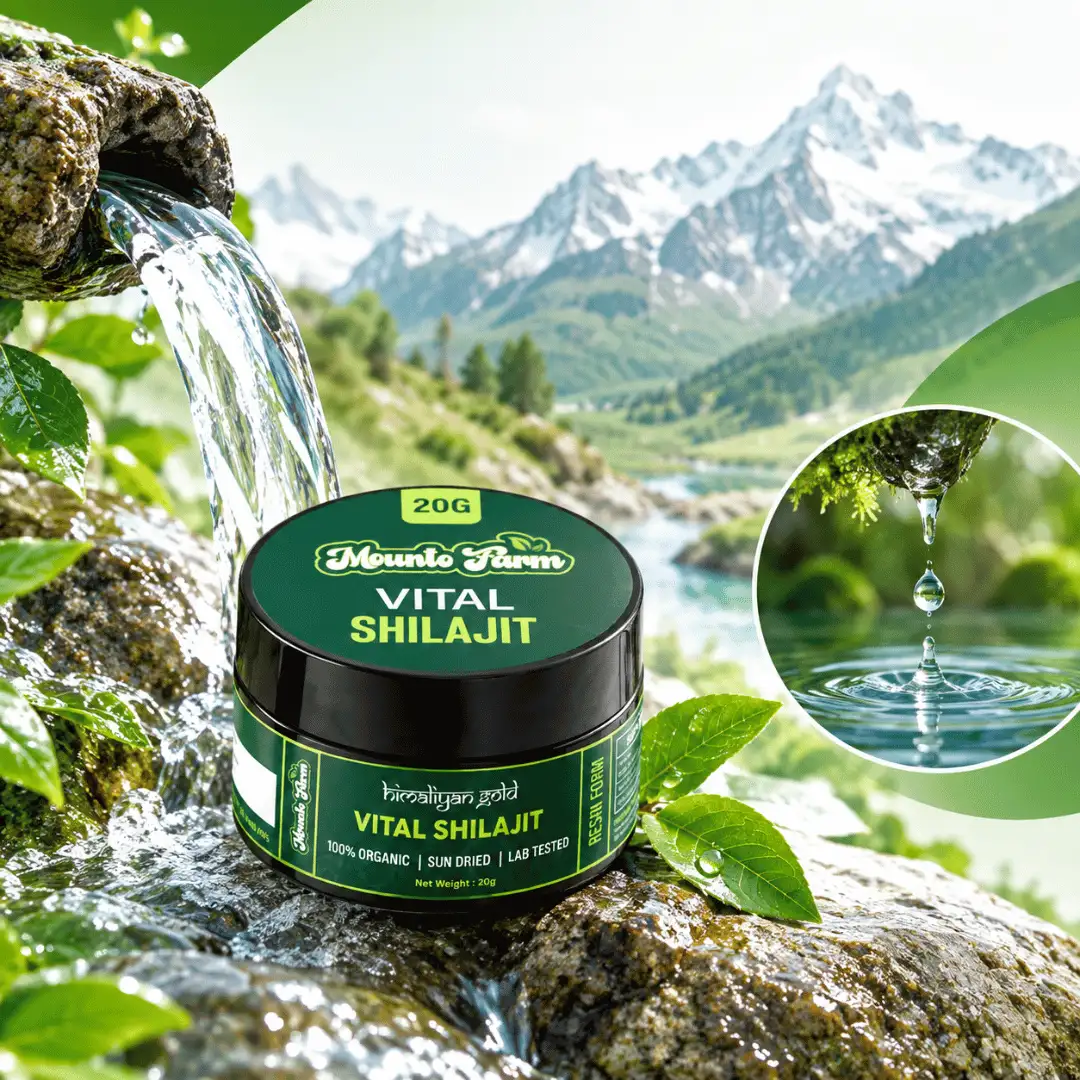
According to MountoFarm, raw Shilajit stones are first crushed and then soaked in fresh Himalayan spring water. This soaking stage helps separate the desired Shilajit material from unwanted particles such as dirt and small stones.
Separating Shilajit From Raw Material
The water-based stage helps move the desired material into the liquid while solid particles can be separated. However, soaking alone is not considered the complete purification process.
Further filtration and drying are used after this stage to prepare the finished Shilajit resin.
How MountoFarm Spring Water Processing Works
MountoFarm Spring Water Processing follows a series of steps. These include crushing the raw material, soaking it in spring water, filtering the resulting liquid, and drying the purified material.
Crushing the Raw Material
The collected Shilajit stones are crushed before soaking. This prepares the raw material for contact with the spring water and begins the processing sequence.
Soaking in Spring Water
MountoFarm states that the crushed material is soaked in fresh Himalayan spring water for approximately 3–4 days. During MountoFarm Spring Water Processing, this stage helps separate the desired material from unwanted particles.
Why Water Quality Matters in MountoFarm Spring Water Processing
Water directly contacts the raw Shilajit during processing, so its source and handling are important considerations. MountoFarm describes the water used during this stage as fresh Himalayan spring water.
However, spring water alone does not determine the quality of finished Shilajit. Filtration, drying, laboratory testing, storage, and clear product information are also important when evaluating a finished product.
Why Source Information Matters
Clear sourcing and processing information helps buyers understand how Shilajit moves from raw mountain material to finished resin. MountoFarm provides information about its sourcing and processing stages.
From Raw Shilajit to Purified Resin
Raw Shilajit and purified Shilajit resin are different. Raw material may contain natural debris and other unwanted particles, while purified resin has gone through additional processing.
MountoFarm Spring Water Processing is one stage in this process. After soaking, the Shilajit-infused water moves through filtration before the purified material reaches the drying stage.
Filtration After Soaking
MountoFarm describes a multi-step filtration process after soaking. This stage is intended to remove unwanted particles such as sand and dirt from the processed material.
Sun-Drying After Filtration
Following filtration, the purified material moves to the drying stage. MountoFarm describes sun-drying as another part of its traditional Shilajit processing method.
How Filtration Supports the Process
Spring-water soaking is only one part of the overall purification method. MountoFarm Spring Water Processing works together with filtration and drying to prepare the finished resin.
Removing Unwanted Particles
Filtration helps separate remaining unwanted solid particles from the Shilajit-infused liquid. This provides an additional cleaning stage after soaking.
Why Multiple Stages Matter
Each processing stage has a different role. Crushing prepares the raw material, soaking supports separation, filtration removes unwanted particles, and drying prepares the final resin.
Why Processing Matters for Quality
The processing method is an important factor when comparing Shilajit products. Buyers should look beyond simple claims such as “natural” or “mountain sourced.”
Purification Before Packaging
Before packaging, Shilajit should go through an appropriate purification process. MountoFarm Spring Water Processing forms one part of MountoFarm’s wider method, followed by filtration and drying.
Testing Still Matters
Processing information is useful, but laboratory testing is also important. Buyers should look for clear quality information and appropriate testing documentation when choosing Shilajit.
How to Choose Quality Shilajit
When selecting Shilajit, consider its sourcing, purification method, processing information, testing, ingredients, packaging, and serving instructions.
A supplier that clearly explains its process can give buyers a better understanding of how the product is prepared. MountoFarm Spring Water Processing is one example of a clearly described processing stage.
FAQs
Why does MountoFarm use spring water?
MountoFarm states that fresh Himalayan spring water is used during the soaking stage of its Shilajit processing method.
How long is Shilajit soaked?
According to MountoFarm, the crushed Shilajit material is soaked in fresh Himalayan spring water for around 3–4 days.
Is spring water the complete purification process?
No. MountoFarm Spring Water Processing is one stage of the wider process. Filtration and drying follow the soaking stage.
Why is filtration important?
Filtration helps remove unwanted particles that may remain after soaking and supports the preparation of purified Shilajit resin.
Conclusion
MountoFarm Spring Water Processing is an important stage in MountoFarm’s Pure Shilajit purification method. Fresh Himalayan spring water is used during soaking, followed by filtration and drying. Together, these steps move the raw material toward finished purified Shilajit resin.
For buyers, the complete processing method matters. Choose Shilajit with clear sourcing, purification, processing, and quality information—explore MountoFarm today.