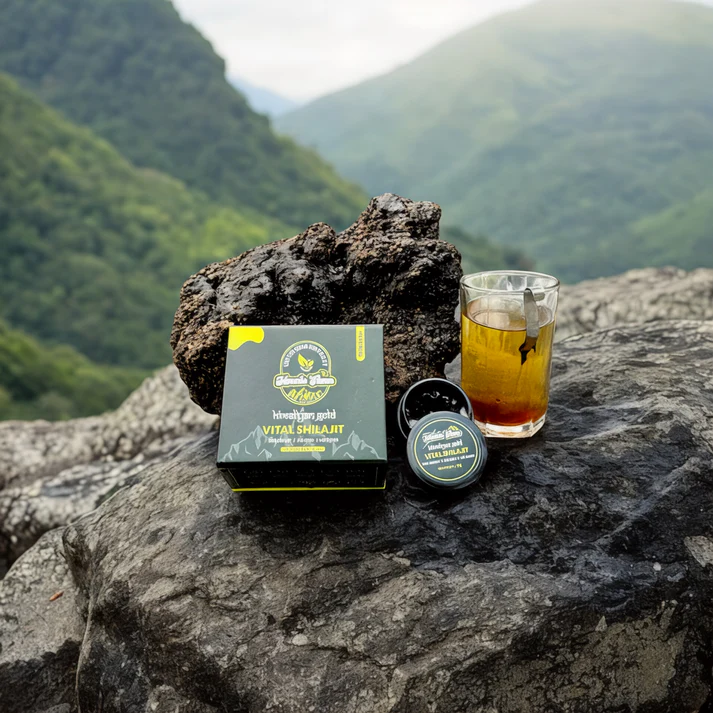
Shilajit is a mineral-rich resin widely used in Ayurvedic and traditional health practices. However, its origin plays a key role in its effectiveness. Many people ask about the differences between Indian and Himalayan Shilajit. This guide compares both types to help you choose wisely.
Indian vs Himalayan Shilajit: What’s the Difference in Origin?
Indian and Himalayan Shilajit come from different regions. Indian Shilajit is mainly collected from areas like Uttarakhand and parts of the Western Ghats. In contrast, Himalayan Shilajit is sourced from high-altitude mountains in Nepal, Bhutan, and the Indian Himalayas.
The Himalayan region provides a cooler, cleaner environment. The extreme altitude often results in better mineral density. Indian regions, though rich in biodiversity, usually have lower elevations, which can affect the final product’s mineral strength.
Indian vs Himalayan Shilajit: What’s the Difference in Composition?
One of the biggest contrasts lies in their composition. Himalayan Shilajit often contains higher levels of fulvic acid, which supports nutrient absorption and energy. It is also rich in trace minerals, including magnesium, zinc, and iron.
Indian Shilajit has a decent mineral profile, but its fulvic acid levels may be lower. Environmental factors, such as soil quality and pollution, influence its composition. This results in varying mineral concentrations between the two types.
Indian vs Himalayan Shilajit: What’s the Difference in Quality?
Quality depends on purity, refinement, and sourcing. Himalayan Shilajit often passes strict testing standards due to its remote origins. It typically undergoes traditional purification techniques to remove contaminants.
Indian Shilajit can also be pure, but quality may differ depending on the supplier. Factors such as color, consistency, and aroma can signal quality differences. Himalayan Shilajit tends to have a stronger, tar-like texture and a rich, earthy scent.
Indian vs Himalayan Shilajit: What’s the Difference in Benefits?
Both types support health, but some effects vary. Himalayan Shilajit is often linked with stronger stamina support, thanks to its rich fulvic acid and mineral content. Many users also notice improved focus and recovery.
Indian Shilajit provides general wellness support and can help boost energy. However, it may offer milder results compared to Himalayan varieties. The difference in mineral content often affects how noticeable the benefits are.
Indian vs Himalayan Shilajit: What’s the Difference in Price and Availability?
Himalayan Shilajit tends to cost more. Its remote sourcing, labor-intensive collection, and high mineral content increase the price. It is also less available due to limited harvesting seasons.
Indian Shilajit is more common and generally costs less. It is easier to source throughout the year, which makes it widely available in the market.
Conclusion
Indian and Himalayan Shilajit both offer valuable health support. However, Himalayan Shilajit stands out for its higher purity, rich mineral content, and stronger effects. If you want superior quality, Himalayan Shilajit is often worth the extra cost.
When buying, always check for lab reports, product certifications, and reputable suppliers to ensure safety and effectiveness.
Ready to experience potent Shilajit? Choose pure Himalayan Shilajit from trusted sources and feel the difference. Shop now for premium quality and noticeable results!